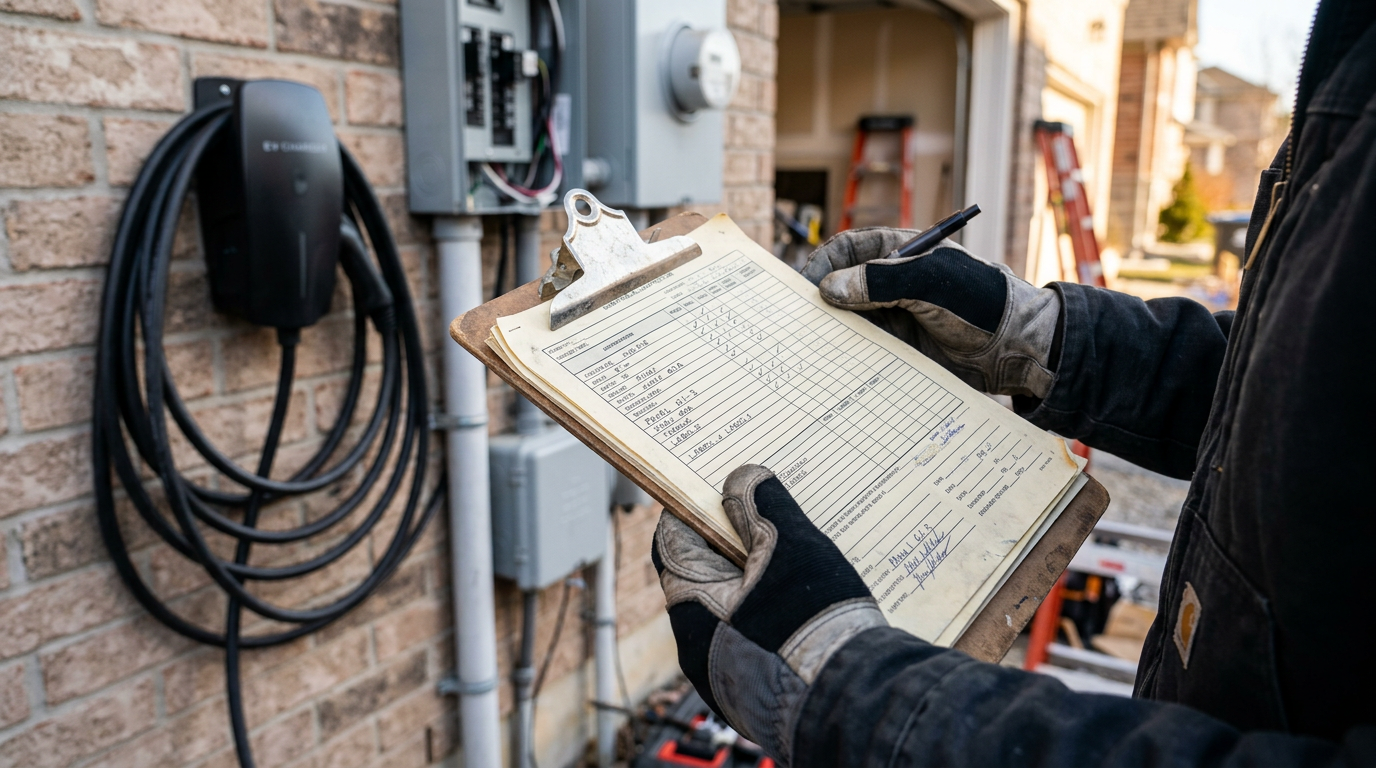
Installing an EV charger involves real electrical work, and in most places that means a permit and an inspection. It is tempting to skip the paperwork, but doing so can create safety, insurance, and resale problems down the line.
Here is what permits are for, what varies, and why the easiest answer is to let a licensed professional handle it.
Why Permits Exist
A dedicated 240-volt circuit and an EV charger draw significant power. Permits and inspections exist to confirm the work meets electrical code — proper wire sizing, breaker, grounding, and connections — so the installation is safe and does not create a fire risk or overload your panel.
What Varies by Location
- Whether a permit is required at all (most jurisdictions require one)
- Permit and inspection fees
- Local amendments to the electrical code
- HOA or landlord approvals for the installation location
- Utility notification for higher-capacity or commercial installs
The Risks of Skipping It
- Safety hazards from improper wiring or an overloaded panel
- Insurance complications if an unpermitted install contributes to a claim
- Problems at resale when unpermitted work is discovered
- Having to redo the work to pass a later inspection
Let a Licensed Installer Handle It
The simplest path is to use a licensed local contractor who knows your jurisdiction, pulls the correct permits, performs the work to code, and coordinates the inspection. EEE Rescue connects you with independent, licensed contractors who manage this process so you do not have to navigate it yourself.
Ready to Install an EV Charger?
Tell us about your project and the EEE Rescue network will connect you with an independent, licensed local contractor for a quote.
Frequently Asked Questions
EEE Rescue is a nationwide EV charging network and dispatch service. We connect customers with independent, licensed local contractors for regulated electrical work. EEE Rescue does not perform electrical installation directly. Pricing, availability, permits, and timelines vary by location and project and are confirmed by the independent professional handling your job.