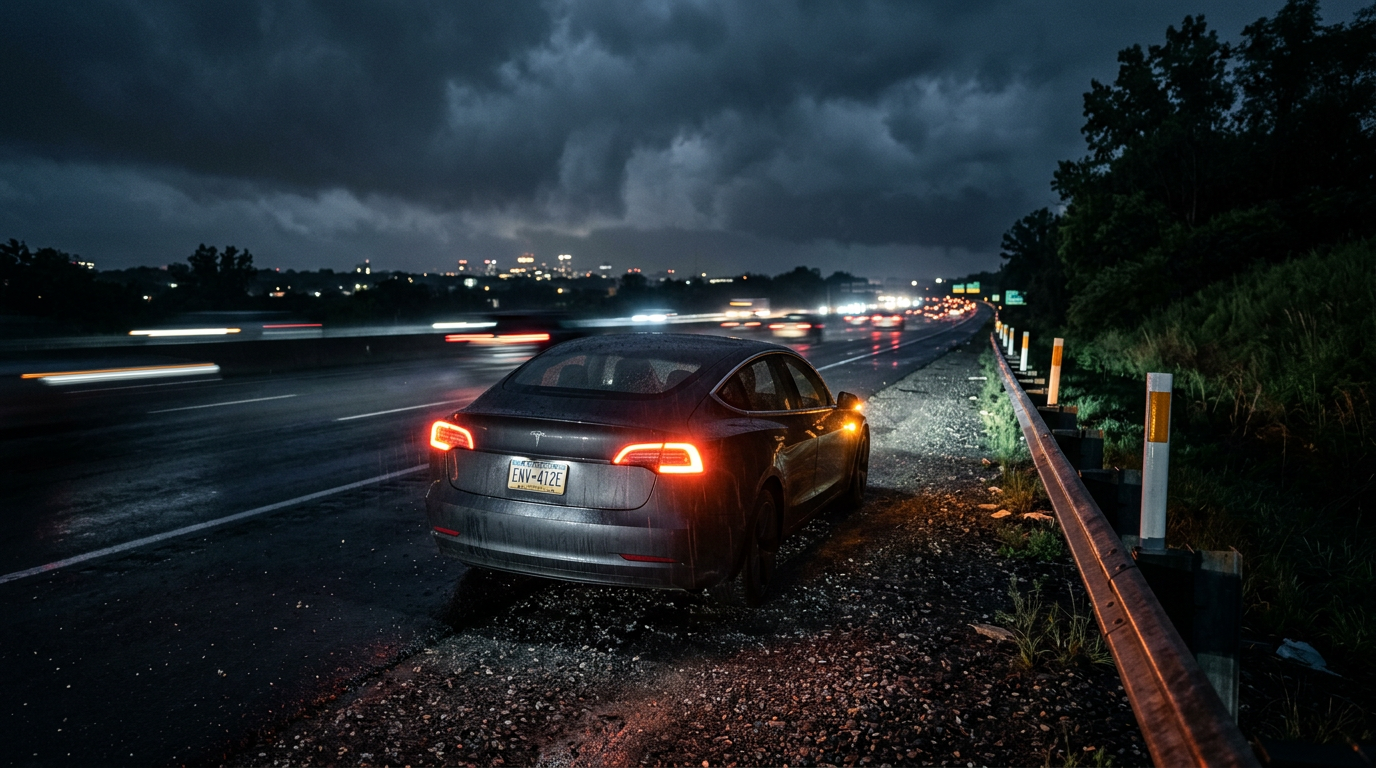
An electric vehicle dying on the highway is one of the most stressful situations an EV driver can face. Unlike a gas car, you cannot coast to a station and fill up in two minutes. But you do have real, fast options — and the most important thing is knowing what they are before panic sets in.
This guide covers exactly what to do in the first five minutes, how to evaluate your options, and why mobile EV charging is almost always faster and cheaper than a tow.
Step 1: Get Safe Immediately
The moment your range drops below 5 miles or your car enters reduced-power "turtle mode," your only job is positioning. You have seconds to minutes of movement left — use them wisely.
- Signal right and pull to the widest part of the shoulder you can reach
- Turn on hazard lights before you come to a full stop
- Stay in the vehicle with your seatbelt on — the highway shoulder is the most dangerous place to stand
- If you have reflective triangles or flares, place them behind the car only when traffic gaps allow
- Call for help from inside the vehicle
Your Emergency Charging Options
Once you are safely stopped, you have three realistic paths back on the road. Each has tradeoffs in cost, speed, and convenience.
- Mobile EV charging — an operator drives to you with portable charging equipment, plugs in, and adds enough range to reach a station or your destination. No tow truck, no loading. Dispatch confirms pricing and estimated arrival time before service.
- Flatbed tow to nearest charger — reliable but slower. You pay the tow, wait for a truck, wait for loading, and then wait for a charge at the destination. Many roadside incidents still require towing.
- Manufacturer roadside assistance — some automakers include a limited number of complimentary tows. Check your warranty terms, but be aware that most programs tow to a dealership or charger, not your home.
Why Mobile Charging Beats Towing on the Highway
On a highway, the advantage of mobile charging is amplified. A tow truck has to navigate to your lane, load the vehicle, and drive to a charging location — adding miles of detour and hours of downtime. A mobile charging operator simply parks behind you, connects, and you drive away.
Mobile charging also avoids the potential for damage during loading and unloading, which is a real concern with flatbed tows for EVs weighing 4,000–6,500 pounds.
How to Call EEE Rescue
Call our dispatch line at (916) 826-9410 or submit a request at eeerescue.com/emergency-request. Share your location, vehicle make and model, and battery status. Where service is available, dispatch confirms pricing and estimated arrival before an independent local operator is sent to your location.
EEE Rescue connects you with independent local mobile EV charging operators in vendor-partner markets where service is available. We are not a tow company — we bring the charge to you.
How to Prevent This Next Time
- Never let your battery drop below 20% on a highway trip — treat that as "empty"
- Plan charging stops before you depart using your car navigation or a charging app
- Remember that highway speeds consume range 20–30% faster than city driving
- Cold weather can reduce range by 30% or more — plan extra buffer in winter
- Save the EEE Rescue dispatch number in your phone: (916) 826-9410
EV Out of Charge? Get Help Now
EEE Rescue connects drivers with independent local mobile EV charging operators where service is available. Emergency charging starts at $199, and dispatch confirms pricing and estimated arrival before service.
Frequently Asked Questions
EEE Rescue is a nationwide EV charging network and dispatch service. We connect customers with independent, licensed local contractors for regulated electrical work. EEE Rescue does not perform electrical installation directly. Pricing, availability, permits, and timelines vary by location and project and are confirmed by the independent professional handling your job.