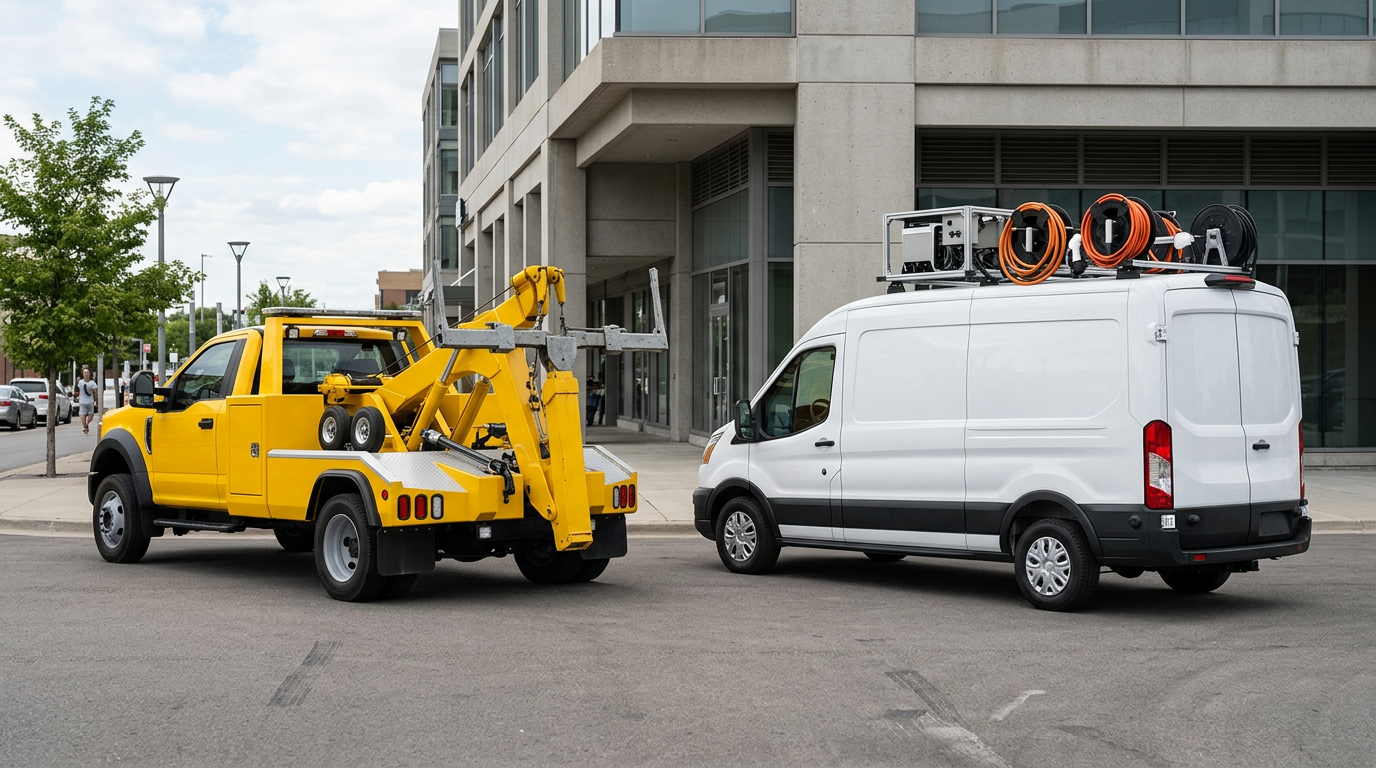
Your electric car just ran out of battery. You are sitting on the side of the road wondering: should I call a mobile EV charging service or wait for traditional roadside assistance to tow me? The answer depends on a few key factors, but in most situations, mobile charging wins on speed, cost, and convenience.
This guide compares the two options honestly so you can make the fastest, smartest call.
The Core Difference
Mobile EV charging brings energy to your vehicle and charges it on-site. You drive away under your own power. Traditional roadside programs — including those from auto manufacturers and general membership services — typically tow your EV to the nearest charger on a flatbed truck. Same outcome (you get a charge), very different experience.
Response Time Comparison
- Mobile EV charging (where available): dispatch confirms estimated arrival time before service, then the operator charges on-site.
- Traditional roadside tow: truck arrival, loading and transport, then charging at the destination. Times vary by provider and location.
Cost Comparison
- Mobile EV charging: starting at $199 for a standard emergency charge, delivered on-site
- Roadside tow (out of pocket or after free-tow limit): $150–$500+ depending on distance
- Some manufacturer warranties include a limited number of complimentary tows per year, but these often have mileage caps and long wait times
Limitations of Traditional Roadside Programs for EVs
Most traditional roadside assistance programs were designed for gasoline cars. When it comes to EVs, they have real limitations:
- EVs must be towed on flatbed trucks — not dragged by a hook, which can damage the drivetrain
- Not all tow operators carry flatbed trucks, which can add wait time
- The tow takes you to a charger, not your destination — so you still have a charge session ahead
- Some programs limit the number of battery-related calls per year
- Wait times are often longer during peak hours, holidays, and in rural areas
When to Call Mobile EV Charging Instead
For most stranded-EV situations, mobile charging is the faster and cheaper choice. Call a dedicated mobile EV charging service like EEE Rescue when:
- You are on a highway and want to minimize time on the shoulder
- You want to avoid the loading/unloading process of a flatbed tow
- You need to get to a specific destination, not just the nearest charger
- Your traditional roadside program has a long estimated wait time
- You want transparent, upfront pricing before service begins
EV Out of Charge? Get Help Now
EEE Rescue connects drivers with independent local mobile EV charging operators where service is available. Emergency charging starts at $199, and dispatch confirms pricing and estimated arrival before service.
Frequently Asked Questions
EEE Rescue is a nationwide EV charging network and dispatch service. We connect customers with independent, licensed local contractors for regulated electrical work. EEE Rescue does not perform electrical installation directly. Pricing, availability, permits, and timelines vary by location and project and are confirmed by the independent professional handling your job.