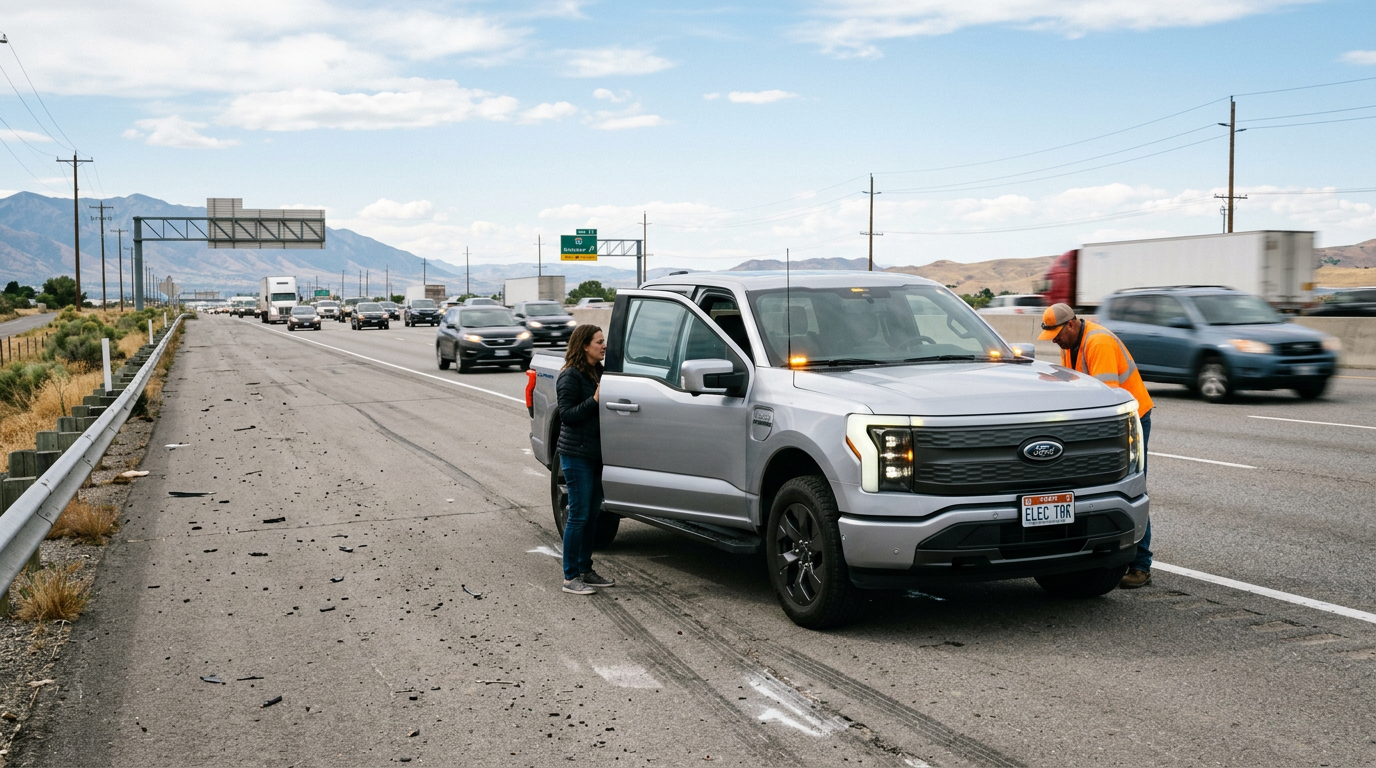
The Ford F-150 Lightning is one of the most popular electric trucks on the road — and with a curb weight of over 6,500 pounds, it presents unique challenges when it runs out of charge. Towing a truck this heavy is expensive, slow, and requires heavy-duty flatbed equipment that is not always immediately available.
This guide covers F-150 Lightning-specific emergency charging solutions, why towing a Lightning is different from towing a sedan, and how mobile EV charging avoids the problem entirely.
What Happens When a Lightning Runs Out of Charge
The F-150 Lightning follows the same depletion pattern as other EVs, with Ford-specific features:
- FordPass app sends push notifications when battery drops below 20%
- The truck reduces power and top speed as battery approaches 0%
- At full depletion, the truck enters a safe shutdown with hazard lights operational
- The 12V system remains active for a limited time, keeping lights and locks functional
- The truck cannot be moved under its own power until it receives an external charge
Why Towing a Lightning Is Harder Than You Think
The F-150 Lightning weighs 6,500–6,900 lbs depending on configuration — that is significantly heavier than most sedans and SUVs. This creates real challenges for towing:
- A standard flatbed may not have the capacity for a full-size truck — you may need a heavy-duty hauler
- Heavy-duty flatbeds are less common and have longer dispatch times
- The cost of towing a 6,500+ lb vehicle 20–30 miles can exceed $300–$500
- Loading and unloading a heavy truck increases the risk of damage
- The truck should never be towed by its wheels — flatbed only to protect the electric drivetrain
FordPass Roadside Assistance: What It Covers
- Ford includes complimentary roadside assistance for Lightning vehicles under warranty
- The service dispatches a flatbed tow — it does not include mobile charging
- Tow distance is typically limited (varies by warranty terms)
- Wait times can be extended for heavy-duty flatbed availability
- Out-of-warranty Lightning owners may pay full tow costs out of pocket
Mobile EV Charging: The Smartest Lightning Solution
Mobile EV charging eliminates the towing problem entirely. An operator drives to your Lightning with portable charging equipment, plugs in, and adds enough range to get you moving. No flatbed, no loading, no heavy-haul fees.
- Works with the Lightning NACS (or CCS on older models) charging port
- No need to find a heavy-duty flatbed — the truck stays on the ground
- Starting at $199 vs $300–$500+ for a heavy-duty tow
- Estimated arrival confirmed by EEE Rescue dispatch before service
- Call dispatch — (916) 826-9410
EV Out of Charge? Get Help Now
EEE Rescue connects drivers with independent local mobile EV charging operators where service is available. Emergency charging starts at $199, and dispatch confirms pricing and estimated arrival before service.
Frequently Asked Questions
EEE Rescue is a nationwide EV charging network and dispatch service. We connect customers with independent, licensed local contractors for regulated electrical work. EEE Rescue does not perform electrical installation directly. Pricing, availability, permits, and timelines vary by location and project and are confirmed by the independent professional handling your job.